Charitable Lead Trust
A giving option that can support ministry now and transfer assets later.
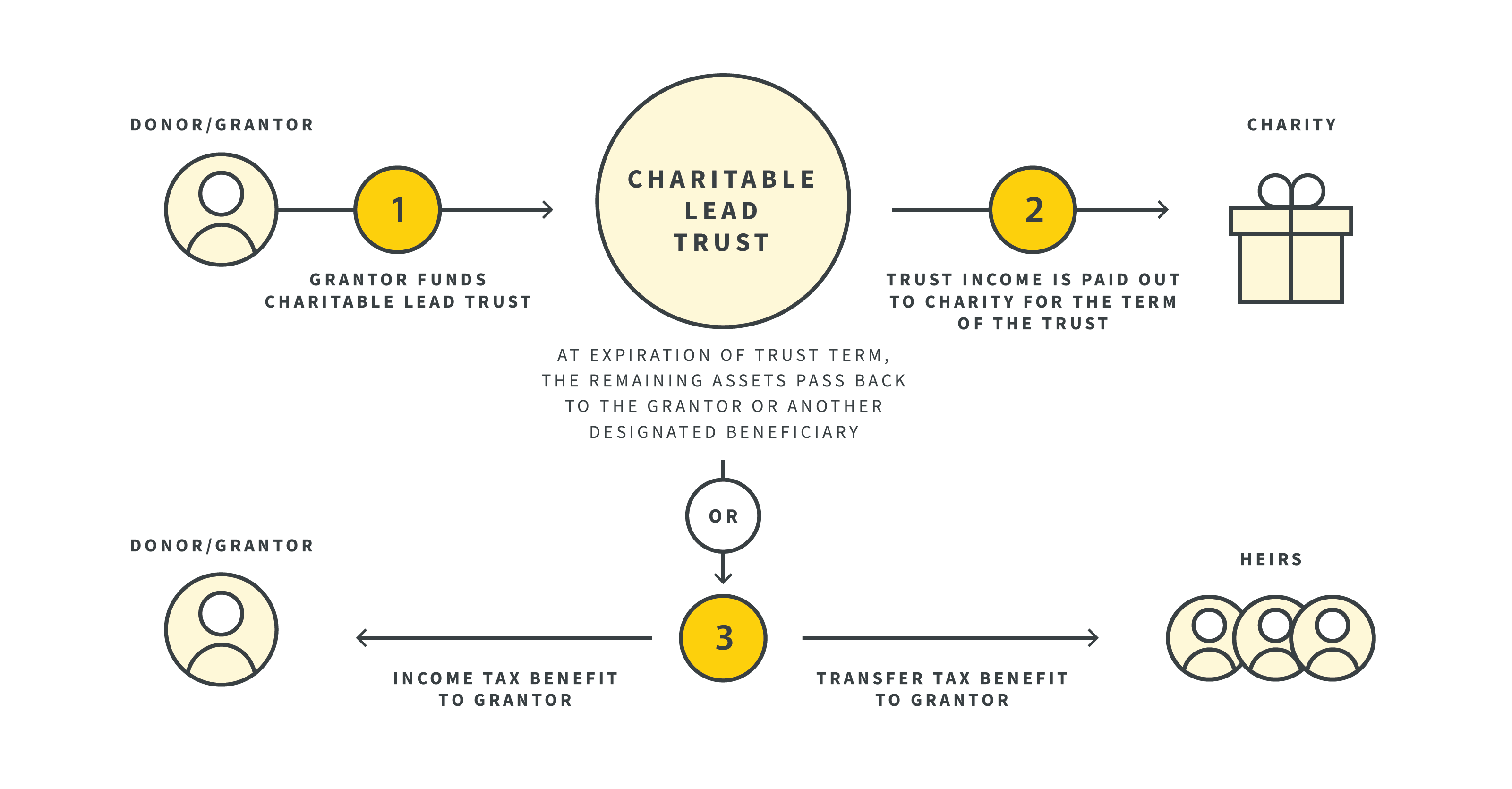
A charitable lead trust is a charitable planning arrangement that provides payments to a charitable beneficiary, such as Cru Foundation, for a set period of time. When that period ends, the remaining trust assets may pass to your chosen personal beneficiaries, such as children or grandchildren.
Some families consider a charitable lead trust when they want to support ministry now while also planning for future transfers to heirs. Others explore this option during a season of unusually high income, when they are already planning to make significant charitable gifts over a number of years.
A charitable lead trust is a complex and irrevocable arrangement, so it should be considered carefully with your attorney, tax professional and financial advisor. Cru Foundation can help you understand how this structure may fit within your broader stewardship goals and ministry intent.

A charitable lead trust tends to fit families in one of two situations.
Unlike many giving structures, a charitable lead trust is usually considered in one of two planning scenarios.
The first is a season of unusually high income. This may happen after the sale of a business, the exercise or vesting of stock options, a large bonus or another year when income is significantly higher than usual. In this kind of moment, some donors consider a charitable lead trust because it may allow them to make a meaningful commitment to ministry over time while addressing a current planning challenge.
The second is a longer-term family stewardship plan. A family with significant assets may want to support ministry for a defined period of years and then transfer remaining assets to children, grandchildren or other beneficiaries. In this context, a charitable lead trust can be one way to think about generosity, inheritance and long-term stewardship together.
A charitable lead trust may be worth exploring if one of these describes your situation:
- You are looking at a year of unusually high income, and a sizeable upfront charitable deduction would meaningfully change your tax picture.
- You hold significantly appreciated assets, and you want to fund ministry now while transferring the underlying value to your children or grandchildren later with reduced tax impact.
- You have a clear ministry purpose for the next decade or more. A CLT is not the right structure if you are still figuring out where you want to give.
- You have advisors in place. A CLT involves your attorney, your CPA, and Cru Foundation working together. Donors who attempt it without that team in place tend to be disappointed.
Because a charitable lead trust requires careful coordination, it is usually best explored with your attorney, tax professional, financial advisor and Cru Foundation working together.
Benefits of a Charitable Lead Trust
Receive a gift or estate tax charitable deduction
Create a significant stream of support for Cru ministries or missionaries over a defined period of time.
Include family beneficiaries in a broader stewardship plan.
Consider potential gift, estate or income tax benefits, depending on how the trust is structured.
Establish a vehicle that supports ideals and programs of eternal worth that will outlast your lifetime.
A structure that can serve ministry first and transfer assets later.
Contribute your property to fund a trust that pays Cru income for a number of years.
Reduce income or estate taxes
After a period of time, your family receives the trust assets plus any additional growth in value
If you have any questions about charitable lead trusts, please contact us. We would be happy to assist you and answer any questions you might have, and provide you with an illustration demonstrating your specific tax benefits.
Types of Agreements
Two common charitable lead trust structures are available:
- A variable income agreement, which generates income for Cru based upon a percentage of the trust assets as valued annually.
- A fixed income agreement, which generates income for Cru based upon a percentage of the assets originally transferred to the trust.
In addition, the agreement can be established:
- During your lifetime, providing an added advantage of removing the income-producing asset from your taxable income stream if you do not need it and placing the property in the hands of your personal beneficiaries for their use at an earlier date, or
- Through your estate, at the time of your passing.

FAQs
a. Not necessarily. However, a charitable lead trust established for the avoidance of estate and gift taxes is only applicable for individuals whose estates are large enough to be subject to estate and gift taxes.
b. For those wanting to convert income taxes into annual gifts, an income of $250,000 or more will typically get the best results.
It is important to understand that the financial security of Cru is immaterial to the financial security of the trust. Property is held by an independent trustee to benefit Cru and the individuals you select, and the strength of the property held by the trust is what provides the financial security.
If your trust is a variable income agreement, the payment to charity will be determined by applying a fixed percentage to the value of the trust assets, as valued annually. If your trust is a fixed income agreement, the annual income payments to charity will be determined by applying a fixed percentage to the value of the trust assets when you fund the trust.
Tell us about the situation behind your interest in a charitable lead trust.
A charitable lead trust is rarely the right starting point for a conversation. The better starting point is your situation: the year you are facing, the family you are planning for, the assets you are holding and the ministry purposes God has placed on your heart.
Fill out the form to start a conversation. A specialist from Cru Foundation will listen to your situation, help you understand the options and walk with you as you consider whether a charitable lead trust may fit your broader stewardship plan.