The parable of the talents helps us see that we need to both pursue fruitfulness with what God entrusts to us while trusting Him with results – including the ones we cannot see or control.
A donor can look at two ministry reports and feel an immediate pull toward the bigger ROI number. One ministry can point to thousands of people reached, churches planted, or disciples made. Another has served faithfully for years in a difficult place and has far less to put on a page.
I’m not saying good stewardship shouldn’t care about the difference. We want ministries to be led well, use resources wisely, learn from their work, and bear fruit. At the same time, a report can only tell us what is visible now. Some of God’s work becomes clear quickly, while other fruit takes years to emerge or may never be seen by the person whose generosity helped make it possible.
So how should a Christian steward evaluate results without assuming responsibility for outcomes only God can control?
Jesus’ parable of the talents in Matthew 25 gives us a helpful place to begin.
Table of Contents
What the parable of the talents shows us
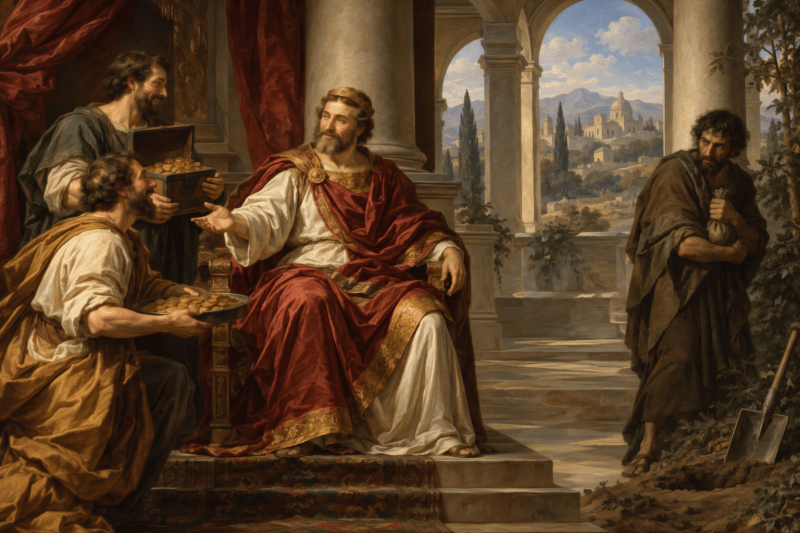
In Matthew 25:14-30, Jesus tells the story of a master who leaves on a journey and entrusts his property to three servants. One receives five talents, another two, and another one, each according to his ability. In this context, a talent is a unit of money, (which, by the way, is why some translations refer to this passage as the parable of the bags of gold).
The first two servants put what they receive to work. When the master returns, each has increased what was entrusted to him, and both hear the same words:
“Well done, good and faithful servant.”
(Matthew 25:21, ESV)
The size of their results is different, but the master describes both servants as faithful. The third servant takes another approach. He protects what he received by burying it and later returns the full amount to the master. Nothing has been lost, but nothing has been done with it either.
When the servant explains his decision to the master, he says it was because he was afraid.
The parable keeps together two ideas we can sometimes separate. The master expects his property to be put to use, so fruitfulness is part of faithful stewardship. Yet the story also directs our attention toward the servants’ relationship with the master. Two receive what he entrusts to them and act. The third allows fear to determine what he does with the master’s property.
Stewardship begins with the Owner
Everything in the parable belongs to the master. The servants have real responsibility and real decisions to make, but they are managing something that is not ultimately theirs.
Christian stewardship begins in the same place. What we have belongs to God, and we have been given responsibility for it for a time. That changes the way we approach a giving decision because the question is no longer simply, What do I want to do with my money? We are asking, What does faithfulness look like with what God has placed in my care?
That includes taking effectiveness seriously. If we are supporting a ministry, we can ask whether its leadership is trustworthy, whether the mission is clear, whether resources are being used responsibly, and whether there is evidence that the work is producing fruit. Stewardship does not ask us to stop thinking carefully simply because the work is labeled as Christian.
But careful stewardship also has limits. We can make a thoughtful decision without knowing everything that will happen because of our investment and while we study the information, we certainly can’t five or ten years into the future.
Our responsibility is to simply to steward what God has entrusted to us. His responsibility is much larger than ours.
Fear can hide inside careful decision-making
The third servant does something that can look reasonable at first. He makes sure the master loses nothing. He takes no chances with what he has received and can return exactly what was placed in his hands.
But his explanation reveals what drove the decision; he was afraid.
That deserves our attention because fear does not always look reckless. Sometimes it looks very careful and even responsible
Due diligence is wise. Asking hard questions about a ministry is wise. Taking time to understand an opportunity before giving is wise. But we can also keep gathering information because we are afraid of making an imperfect decision. We can look for a level of certainty that no ministry report can provide, or become so focused on finding the highest possible return that we struggle to release anything until we know exactly what it will accomplish.
The difference is not always easy to recognize. Knowing the Owner helps us see it more clearly.
If stewardship is ultimately a relationship of trust, wisdom does not have to produce certainty before we act. It gives us enough understanding to make a responsible decision and then entrust what comes next to God.
Ask good questions without demanding perfect answers
A Christian donor does not have to choose between evaluating a ministry carefully and trusting God. Both belong in the same decision.
Before giving, it is reasonable to ask:
- Is the ministry clear about the work it believes God has called it to do?
- Is the leadership trustworthy and accountable?
- Are resources being used responsibly?
- Is there evidence that the ministry is accomplishing its mission?
- Does the organization learn and adjust when something is not working?
- Does the ministry’s context help explain the results we are seeing?
Those questions can tell us a great deal. They still cannot remove every unknown.
Ministry happens among real people in different cultures, communities, churches, and circumstances. Work that produces visible results quickly in one setting may require years of patient investment somewhere else. A strategy can also fail, which is why good stewardship requires enough honesty to recognize when poor results point to a problem rather than simply explaining every disappointing outcome as faithfulness.
We need discernment in both directions.
Good reporting gives us information worth considering but it cannot give us control over what happens next.
Some fruit takes longer to see
Donors naturally want to know what their generosity is accomplishing, and ministries have a responsibility to communicate honestly about their work. Numbers can help us understand whether people are being served, the gospel is being shared, disciples are being made, or a strategy is producing the results it was designed to produce.
But ministry does not always happen on a reporting schedule.
A missionary may invest for years in relationships before someone becomes willing to talk seriously about Jesus. A Cru staff member may disciple a college student without knowing how God will use that student decades later. A donor may help fund a translation, training program, or ministry resource and never meet the people who eventually benefit from it.
Scripture gives us language for this kind of work. Paul describes one person planting, another watering, and God giving the growth (1 Corinthians 3:6, ESV). Each person participates in real work, but no one person can claim the whole result.
That helps us interpret ministry reports with both seriousness and humility. Modest results may reveal a strategy that needs to change. They may also reflect faithful work in difficult soil where the harvest takes longer than we hoped.
A number can help us ask better questions but it cannot tell the entire story by itself.
The need for certainty can reveal something in us
Generosity does more than move resources, it can expose our own relationship with control. Yikes. Even as I write that, I’m convicted.
Sometimes we want evidence because we are trying to steward responsibly. At other times, we want enough evidence to protect ourselves from the discomfort of making a decision without knowing the outcome. Those motives can exist together (we’re human), which is why giving can become part of our formation as stewards.
Once resources are released, we no longer control what follows. We may receive reports, photographs, numbers, and stories that show us what happened. We may see fruit beyond what we imagined. Most likely, we spend the rest of our lives knowing only a small part of what God did with the gift.
Ideally, we learn to ask good questions without believing we can know everything. We become more attentive to our own fear and our desire for control. We practice entrusting both the resource and its eventual fruit to the God who sees the entire story, and trust Him with it.
This is one reason generosity is more than a financial transaction. It becomes part of learning how to live as a steward rather than an owner.
Faithful stewardship leaves the outcome with God
The first two servants in Matthew 25 did not know everything that would happen when they put the master’s property to work. They accepted responsibility for what had been placed in their hands and acted faithfully with it.
Our decisions will look different. Sometimes stewardship will lead us to support a ministry with a long record of measurable fruit. Sometimes we may choose to support work in a difficult place where progress comes slowly. At other times, the evidence may tell us that a ministry needs to change before we continue giving.
Although we wish there was, there is no formula that makes those decisions for us.
What we can do is know the Owner, pay attention to what He has entrusted to us, seek wisdom, ask honest questions, and make the best decision we can with what we know. Then we release the outcome from the burden of being ours to control.
It’s not careless stewardship, it’s faithful stewardship practiced with humility about where our responsibility ends and God’s begins.
Frequently Asked Questions
What is the main meaning of the parable of the talents?
In Matthew 25:14-30, a master entrusts his property to three servants and later asks them to account for how they used it. The parable of the talents shows servants being held responsible for what the master placed in their care. Two put what they received to work and are commended as faithful, while the third allows fear to keep him from using what he was given.
Does the parable of the talents teach Christians to focus on return on investment?
The parable shows that fruitfulness is part of faithful stewardship, but it does not teach that the largest return is the only measure of faithfulness. The first two servants begin with different amounts and produce different results, yet both receive the same commendation from the master.
How should Christians evaluate whether a ministry is fruitful?
Donors can consider the ministry’s leadership, accountability, clarity of mission, responsible use of resources, and evidence that its work is accomplishing what it exists to do. The context of the work is also important because some ministry fruit develops more slowly or is harder to measure than other kinds of work.
Is it unwise to support a ministry with few visible results?
Not necessarily. Modest results can raise legitimate questions about strategy, leadership, or effectiveness, and those questions deserve honest answers. They can also reflect ministry taking place in a difficult context where fruit develops over a longer period of time. Wise stewardship considers both the available evidence and the nature of the work.
Why is the parable of the talents sometimes called the parable of the bags of gold?
A talent in Matthew 25 refers to a large unit of money, not the modern idea of a personal skill or ability. Some Bible translations use the phrase “bags of gold” to communicate that financial meaning more clearly. Both names refer to the story Jesus tells in Matthew 25:14-30.
When you’re ready
Some giving decisions are straightforward. Others take time, prayer, information, and discernment. Cru Foundation specialists help families think through the spiritual and practical responsibilities that come with stewardship, including how to evaluate opportunities without assuming we can control every outcome.
If you are working through a giving decision, we would be glad to listen and help you think through what God has entrusted to you and what faithful stewardship may look like.
Start a conversation with Cru Foundation
This content is provided for educational purposes only and should not be considered legal or tax advice. Please consult your professional advisor regarding your specific situation.